Friday, August 31, 2018
Pastry Chef Attempts To Make Gourmet Kit Kats | Gourmet Makes | Bon Appétit
Some nibble away at the chocolate shell first; others may split the wafers apart before eating. They may have their preferences, but what what they may not know is their routines help to reverse engineer what it takes to make one in the first place. Claire Saffitz is up to the challenge to make Gourmet Kit Kats!
Check out Claire"s Instagram: https://www.instagram.com/csaffitz/
Still haven’t subscribed to Bon Appetit on YouTube? ►► http://bit.ly/1TLeyPn
ABOUT BON APPÉTIT
Cook with confidence using Bon Appetit’s kitchen tips, recipes, videos, and restaurant guides. Stay current on the latest food trends, dining destinations, and hosting ideas.
Pastry Chef Attempts To Make Gourmet Kit Kats | Gourmet Makes | Bon Appétit
source

Scandinavian-Inspired Spiked Sodas : Hartwall Original Long Drink

"Hartwall Original Long Drink" Combines Gin & Grapefruit Soda
Hartwall Original Long Drink is based on what is touted as the national drink of Finland, which was first created in the 50s for the Helsinki Olympics to help restaurants and bars handle the high volume of crowds with an easy-to-serve cocktail in a bottle. Now, the Scandinavian-inspired beverage is making its way to the UK with a format that follows the original recipe.
TheHartwall Original Long Drink is a combination of premium Finnish gin and zesty grapefruit soda that is said to be altogether high-quality, crisp and refreshing.
The Hartwall Original Long Drink is available in both bottles and cans, with a nostalgic design that references the beverage"s ties to the 1952 Helsinki Olympics and the torch used to light the Olympic flame.
Source link
When Does The Good Place Come Back? 2018
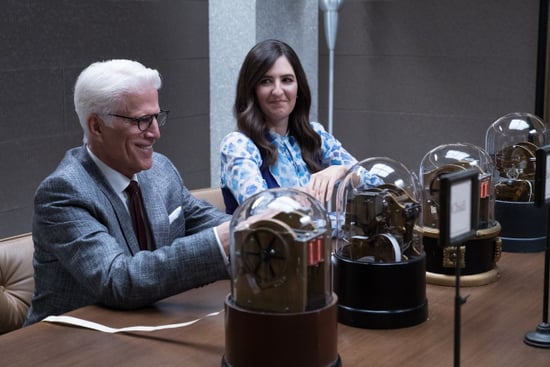
Half a year without The Good Place feels like eternal torture, especially if you, like me (and Eleanor Shellstrop), are a medium person who lives for television. But get ready, benches — Michael Schur"s quirky philosophical comedy will come back for a third season sooner than you know it. Yup, while Brooklyn Nine-Nine, Schur"s other beloved sitcom, won"t return until next year, we"ll be getting brand-new episodes of The Good Place this September.
Back in November 2017, NBC announced that it would renew the show for a third season with 13 episodes. In June, the network revealed its slate of Fall television premieres, dropping the news that it will air a special one-hour debut of The Good Place"s third season on Thursday, Sept. 27, at 8 p.m. ET/PT. (D"Arcy Carden, who plays Janet, shared the announcement in her own special way.) The show will return to its normal slot the following week on Thursday, Oct. 4, at 8:30 p.m.
Now, if you"ll excuse us, we"ll be enjoying our frozen yogurt while waiting for the show"s second season to hit Netflix. And, of course, keeping our fingers crossed for Ted Danson"s Emmy nomination for best actor in a comedy series.
Source link
[page_popup id="1"]
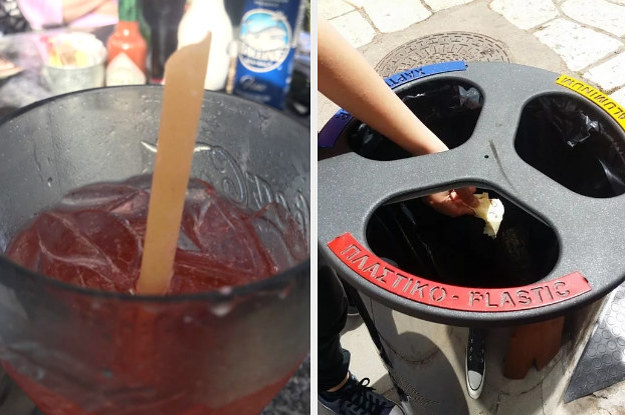
9 Genius Ideas That Are Helping To Save The Planet And 9 That Are Doing, Well…The Opposite
Thursday, August 30, 2018
Movies Coming Out in September 2018
Fact: if you don"t watch the hottest new movie releases in theaters, you"re going to miss out on some great water cooler chats. With exciting novel adaptations, incredible true stories, and an animated film voiced by some of Hollywood"s biggest stars, it"s safe to say September has a batch of releases that are totally worth the price of a movie ticket (and also a large popcorn). Here are 12 new releases you better have on your radar next month.
Source link
The New Hunt for Dark Matter Is Taking Place Under a Mountain
THE MOST UNKNOWN is Motherboard"s love letter to the scientific process. For the next nine weeks, we"ll be profiling the people trying to answer science"s most difficult questions. Our feature-length documentary is now available on Netflix, and bonus episodes are available on YouTube.
About an hour outside of Rome there’s a dense cluster of mountains known as the Gran Sasso d’Italia. Renowned for their natural beauty, the Gran Sasso are a popular tourist destination year round, offering world-class skiing in the winter and plenty of hiking and swimming opportunities in the summer. For the 43-year old Italian physicist Davide D’Angelo, these mountains are like a second home. Unlike most people who visit Gran Sasso, however, D’Angelo spends more time under the mountains than on top of them.
It"s here, in a cavernous hall thousands of feet beneath the earth, that D’Angleo works on a new generation of experiments dedicated to the hunt for dark matter particles, an exotic form of matter whose existence has been hypothesized for decades but never proven experimentally.
Dark matter is thought to make up about 27 percent of the universe and characterizing this elusive substance is one of the most profound problems in contemporary physics. Although D"Angelo is optimistic that a breakthrough will occur in his lifetime, so was the last generation of physicists. In fact, there"s a decent chance that the particles D"Angelo is looking for don"t exist at all. Yet for physicists probing the fundamental nature of the universe, the possibility that they might spend their entire career "hunting ghosts," as D"Angelo put it, is the price of advancing science.
WHAT"S UNDER THE "GREAT STONE"?
In 1989, Italy’s National Institute for Nuclear Physics opened the Gran Sasso National Laboratory, the world’s largest underground laboratory dedicated to astrophysics. Gran Sasso’s three cavernous halls were purposely built for physics, which is something of a luxury as far as research centers go. Most other underground astrophysics laboratories like SNOLAB are ad hoc facilities that repurpose old or active mine shafts, which limits the amount of time that can be spent in the lab and the types of equipment that can be used.
Buried nearly a mile underground to protect it from the noisy cosmic rays that bathe the Earth, Gran Sasso is home to a number of particle physics experiments that are probing the foundations of the universe. For the last few years, D’Angelo has divided his time between the Borexino observatory and the Sodium Iodide with Active Background Rejection Experiment (SABRE), which are investigating solar neutrinos and dark matter, respectively.
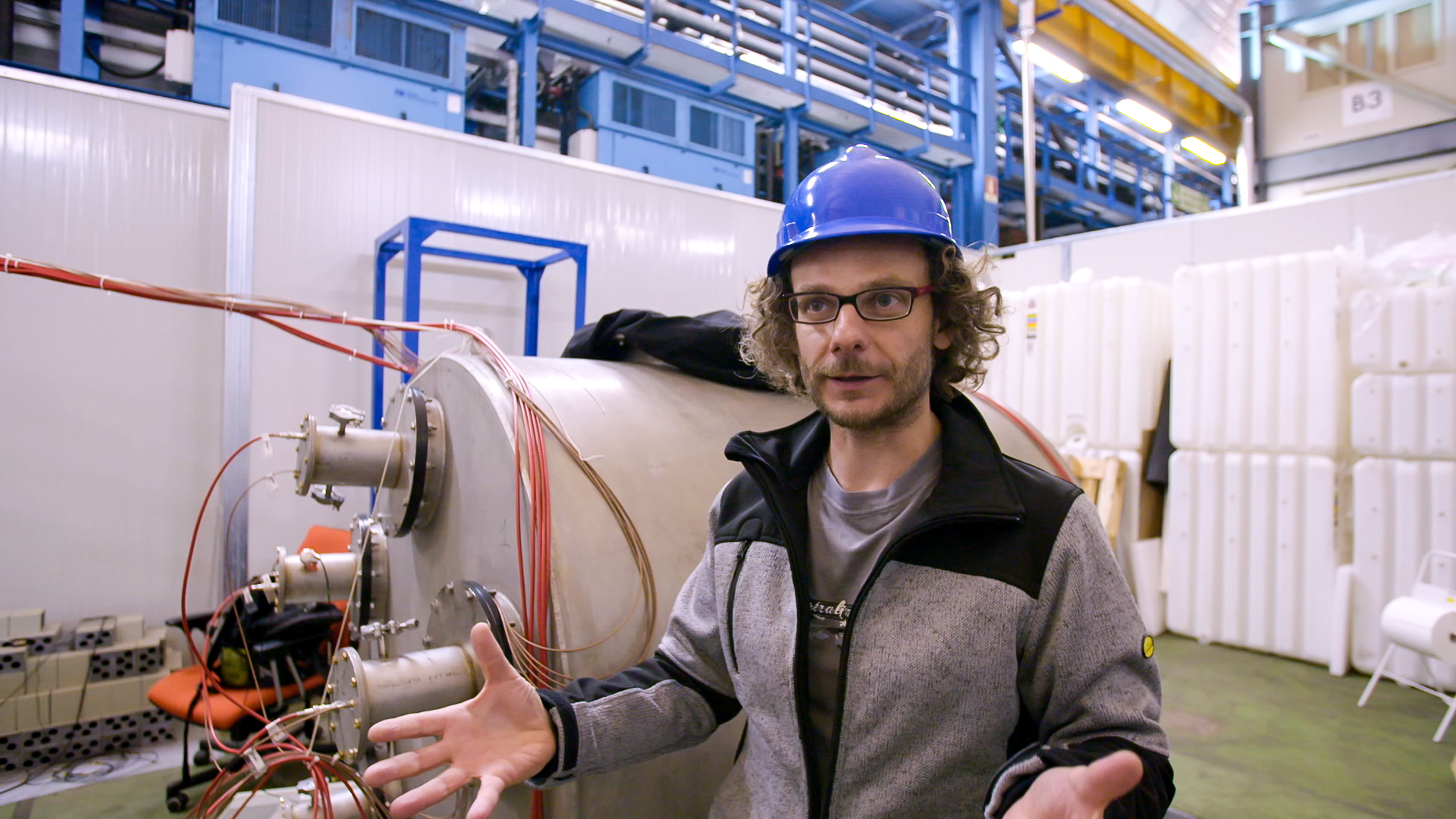
Davide D"Angelo with the SABRE proof of concept. Image: Xavier Aaronson/Motherboard
Over the last 100 years, characterizing solar neutrinos and dark matter was considered to be one of the most important tasks of particle physics. Today, the mystery of solar neutrinos is resolved, but the particles are still of great interest to physicists for the insight they provide into the fusion process occurring in our Sun and other stars. The composition of dark matter, however, is still considered to be one of the biggest questions in particle physics. Despite the radically different nature of the particles, they are united insofar as they both can only be discovered in environments where the background radiation is at a minimum: Thousands of feet beneath the Earth’s surface.
“The mountain acts as a shield so if you go below it, you have so-called ‘cosmic silence,’” D’Angelo said. “That’s the part of my research I like most: Going into the cave, putting my hands on the detector and trying to understand the signals I’m seeing.”
After finishing grad school, D’Angelo got a job with Italy’s National Institute for Nuclear Physics where his research focused on solar neutrinos, a subatomic particle with no charge that is produced by fusion in the Sun. For the better part of four decades, solar neutrinos were at the heart of one of the largest mysteries in astrophysics. The problem was that instruments measuring the energy from solar neutrinos returned results much lower than predicted by the Standard Model, the most accurate theory of fundamental particles in physics.
Given how accurate the Standard Model had proven to be for other aspects of cosmology, physicists were reluctant to make alterations to it to account for the discrepancy. One possible explanation was that physicists had faulty models of the Sun and better measurements of its core pressure and temperature were needed. Yet after a string of observations in the 60s and 70s demonstrated that the models of the sun were essentially correct, physicists sought alternative explanations by turning to the neutrino.
A TALE OF THREE NEUTRINOS
Ever since they were first proposed by the Austrian physicist Wolfgang Pauli in 1930, neutrinos have been called upon to patch holes in theories. In Pauli’s case, he first posited the existence of an extremely light, chargeless particle as a “desperate remedy” to explain why the law of the conservation of energy appeared to be violated during radioactive decay. Three years later, the Italian physicist Enrico Fermi gave these hypothetical particles a name. He called them “neutrinos,” Italian for “little neutrons.”
A quarter of a century after Pauli posited their existence, two American physicists reported the first evidence of neutrinos produced in a fission reactor. The following year, in 1957, Bruno Pontecorvo, an Italian physicist working in the Soviet Union, developed a theory of neutrino oscillations. At the time, little was known about the properties of neutrinos and Pontecorvo suggested that there might be more than one type of neutrino. If this were the case, Pontecorvo theorized that it could be possible for the neutrinos to switch between types.
By 1975, part of Pontecorvo’s theory had been proven correct. Three different types, or “flavors,” of neutrino had been discovered: electron neutrinos, muon neutrinos, and tau neutrinos. Importantly, observations from an experiment in a South Dakota mineshaft had confirmed that the Sun produced electron neutrinos. The only issue was that the experiment detected far fewer neutrinos than the Standard Model predicted.
Prior to the late 90s, there was scant indirect evidence that neutrinos could change from one flavor to another. In 1998, a group of researchers working in Japan’s Super-Kamiokande Observatory observed oscillations in atmospheric neutrinos, which are mostly produced by the interactions between photons and the Earth’s atmosphere. Three years later, Canada’s Sudbury Neutrino Observatory (SNO) provided the first direct evidence of oscillations from solar neutrinos.
This was, to put it lightly, a big deal in cosmological physics. It effectively resolved the mystery of the missing solar neutrinos, or why experiments only observed about a third as many neutrinos radiating from the Sun compared to predictions made by the Standard Model. If neutrinos could oscillate between flavors, this means a neutrino that is emitted in the Sun’s core could be a different type of neutrino by the time it reaches Earth. Prior to the mid-80s, most experiments on Earth were only looking for electron neutrinos, which meant they were missing the other two flavors of neutrinos that were created en route from the Sun to the Earth.
When SNO was dreamt up in the 80s, it was designed so that it would be capable of detecting all three types of neutrinos, instead of just electron neutrinos. This decision paid off. In 2015, the directors of the experiments at Super-Kamiokande and SNO shared the Nobel Prize in physics for resolving the mystery of the missing solar neutrinos.
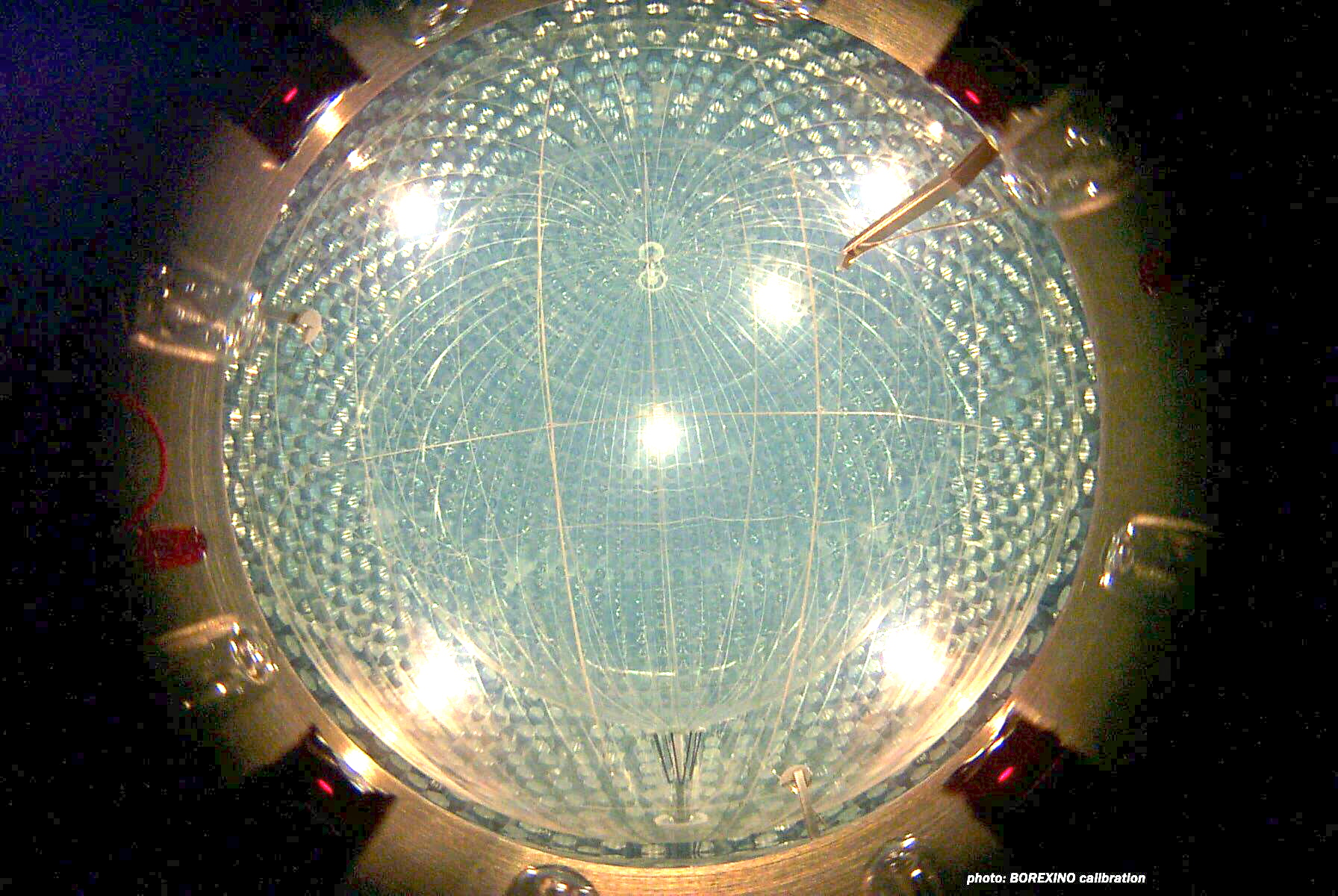
The Borexino detector. Image: LNFN
Although the mystery of solar neutrinos has been solved, there’s still plenty of science to be done to better understand them. Since 2007, Gran Sasso’s Borexino observatory has been refining the measurements of solar neutrino flux, which has given physicists unprecedented insight into the fusion process powering the Sun. From the outside, the Borexino observatory looks like a large metal sphere, but on the inside it looks like a technology transplanted from an alien world.
In the center of the sphere is basically a large, transparent nylon sack that is almost 30 feet in diameter and only half a millimeter thick. This sack contains a liquid scintillator, a chemical mixture that releases energy when a neutrino passes through it. This nylon sphere is suspended in 1,000 metric tons of a purified buffer liquid and surrounded by 2,200 sensors to detect energy released by electrons that are freed when neutrinos interact with the liquid scintillator. Finally, an outer buffer of nearly 3,000 tons of ultrapure water helps provide additional shielding for the detector. Taken together, the Borexino observatory has the most protection from outside radiation interference of any liquid scintillator in the world.
For the last decade, physicists at Borexino—including D’Angelo, who joined the project in 2011—have been using this one-of-a-kind device to observe low energy solar neutrinos produced by proton collisions during the fusion process in the Sun’s core. Given how difficult it is to detect these chargless, ultralight particles that hardly ever interact with matter, detecting the low energy solar neutrinos would be virtually impossible without such a sensitive machine. When SNO directly detected the first solar neutrino oscillations, for instance, it could only observe the highest energy solar neutrinos due to interference from background radiation. This amounted to only about 0.01 percent of all the neutrinos emitted by the Sun. Borexino’s sensitivity allows it to observe solar neutrinos whose energy is a full order of magnitude lower than those detected by SNO, opening the door for an incredibly refined model of solar processes as well as more exotic events like supernovae.
“It took physicists 40 years to understand solar neutrinos and it’s been one of the most interesting puzzles in particle physics,” D’Angelo told me. “It’s kind of like how dark matter is now.”
SHINING A LIGHT ON DARK MATTER
If neutrinos were the mystery particle of the twentieth century, then dark matter is the particle conundrum for the new millenium. Just like Pauli proposed neutrinos as a “desperate remedy” to explain why experiments seemed to be violating one of the most fundamental laws of nature, the existence of dark matter particles is inferred because cosmological observations just don’t add up.
In the early 1930s, the American astronomer Fritz Zwicky was studying the movement of a handful of galaxies in the Coma cluster, a collection of over 1,000 galaxies approximately 320 million light years from Earth. Using data published by Edwin Hubble, Zwicky calculated the mass of the entire Coma galaxy cluster. When he did, Zwicky noticed something odd about the velocity dispersion—the statistical distribribution of the speeds of a group of objects—of the galaxies: The velocity distribution was about 12 times higher than it should be based on the amount of matter in the galaxies.
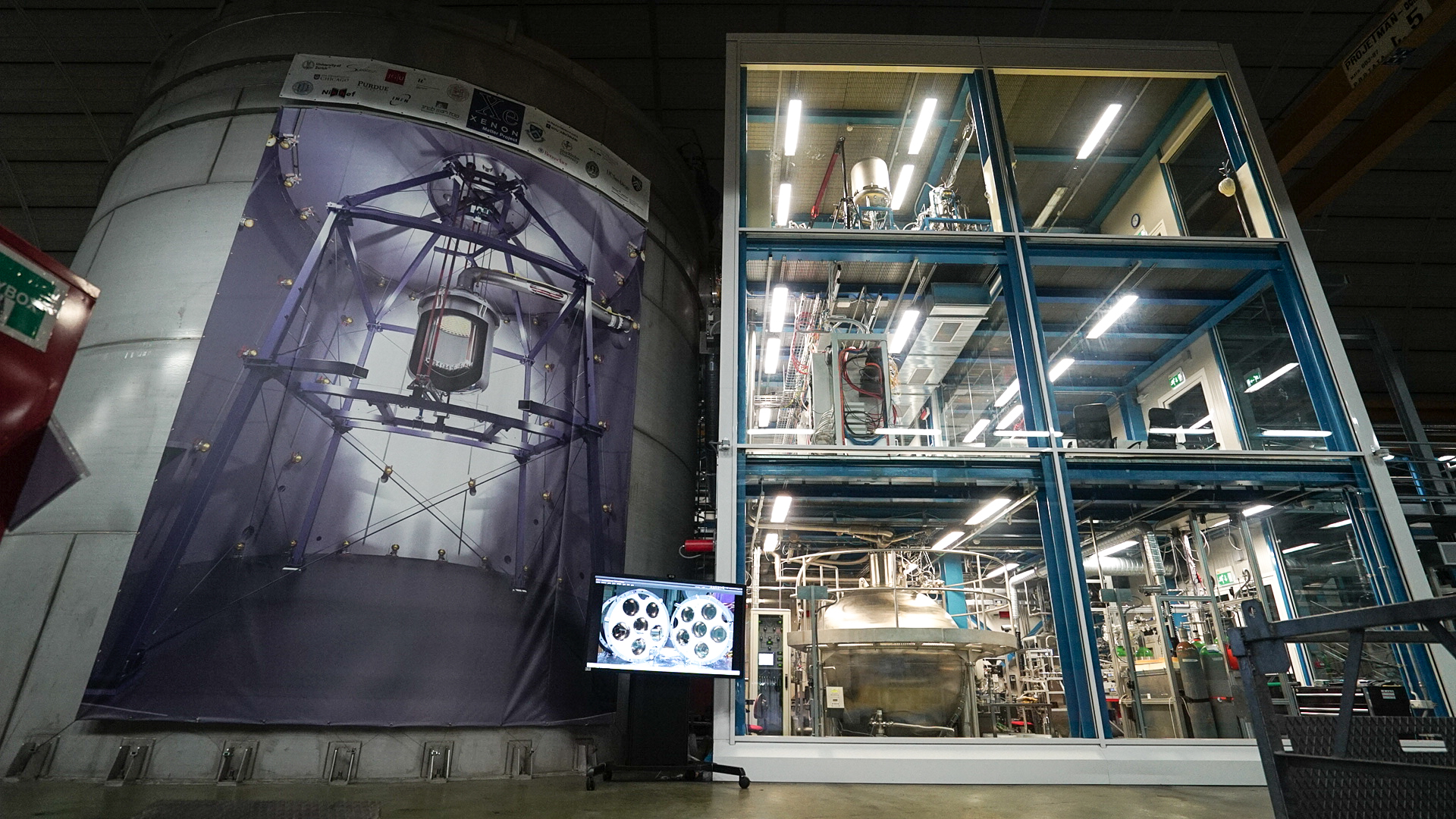
Inside Gran Sasso. Image: Xavier Aaronson/Motherboard
This was a surprising calculation and its significance wasn’t lost on Zwicky. “If this would be confirmed,” he wrote, “we would get the surprising result that dark matter is present in much greater amount than luminous matter.”
The idea that the universe was made up mostly of invisible matter was a radical idea in Zwicky’s time and still is today. The main difference, however, is that astronomers now have much stronger empirical evidence pointing to its existence. This is mostly due to the American astronomer Vera Rubin, whose measurement of galactic rotations in the 1960s and 70s put the existence of dark matter beyond a doubt. In fact, based on Rubin’s measurements and subsequent observations, physicists now think dark matter makes up about 27 percent of the “stuff” in the universe, about seven times more than the regular, baryonic matter we’re all familiar with. The burning question, then, is what is it made of?
“Of course I am afraid that there might not be any dark matter there and we are hunting ghosts."
Since Rubin’s pioneering observations, a number of dark matter candidate particles have been proposed, but so far all of them have eluded detection by some of the world’s most sensitive instruments. Part of the reason for this is that physicists aren’t exactly sure what they’re looking for. In fact, a small minority of physicists think dark matter might not be a particle at all and is just an exotic gravitational effect. This makes designing dark matter experiments kind of like finding a car key in a stadium parking lot and trying to track down the vehicle it pairs with. There’s a pretty good chance the car is somewhere in the parking lot, but you’re going to have to try a lot of doors before you find your ride—if it even exists.
Among the candidates for dark matter are subatomic particles with goofy names like axions, gravitinos, Massive Astrophysical Compact Halo Objects (MACHOs), and Weakly Interacting Massive Particles (WMIPs.) D’Angelo and his colleagues at Gran Sasso have placed their bets on WIMPs, which until recently were considered to be the leading particle candidate for dark matter.
Over the last few years, however, physicists have started to look at other possibilities after some critical tests failed to confirm the existence of WIMPs. WIMPs are a class of hypothetical elementary particles that hardly ever interact with regular baryonic matter and don’t emit light, which makes them exceedingly hard to detect. This problem is compounded by the fact that no one is really sure how to characterize a WIMP. Needless to say, it’s hard to find something if you’re not even really sure what you’re looking for.
So why would physicists think WIMPs exist at all? In the 1970s, physicists conceptualized the Standard Model of particle physics, which posited that everything in the universe was made out of a handful of fundamental particles. The Standard Model works great at explaining almost everything the universe throws at it, but it’s still incomplete since it doesn’t incorporate gravity into the model. In the 1980s, an extension of the Standard Model called Supersymmetry emerged, which hypothesizes that each fundamental particle in the Standard Model has a partner. These particle pairs are known as supersymmetric particles and are used as the theoretical explanation for a number of mysteries in Standard Model physics, such as the mass of the Higgs boson and the existence of dark matter. Some of the most complex and expensive experiments in the world like the Large Hadron Collider particle accelerator were created in an effort to discover these supersymmetric particles, but so far there’s been no experimental evidence that these particles actually exist.
Read More: Inside SNOLAB, the Dark Matter Lab Buried One Mile Underground
Many of the lightest particles theorized in the supersymmetric model are WIMPs and go by names like the gravitino, sneutrino and neutralino. The latter is still considered to be the leading candidate for dark matter by many physicists and is thought to have formed in abundance in the early universe. Detecting evidence of this ancient theoretical particle is the goal of many dark matter experiments, including the one D’Angelo works on at Gran Sasso.
D’Angelo told me he became interested in dark matter a few years after joining the Gran Sasso laboratory and began contributing to the laboratory’s DarkSide experiment, which seemed like a natural extension of his work on solar neutrinos. DarkSide is essentially a large tank filled with liquid argon and equipped with incredibly sensitive sensors. If WIMPs exist, physicists expect to detect them from the ionization produced through their collision with the argon nuclei.
The DarkSide experiment has been running at Gran Sasso since 2013 and D’Angelo said it is expected to continue for several more years. These days, however, he’s found himself involved with a different dark matter experiment at Gran Sasso called SABRE, which will also look for direct evidence of dark matter particles based on the light produced when energy is released through their collision with Sodium-Iodide crystals.
The set up of the SABRE experiment is deliberately similar to another experiment that has been running at Gran Sasso since 1995 called DAMA. In 2003, the DAMA experiment began looking for seasonal fluctuations in dark matter particles that was predicted in the 1980s as a consequence of the relative motion of the sun and Earth to the rest of the galaxy. The theory posited that the relative speed of any dark matter particles detected on Earth should peak in June and bottom out in December.
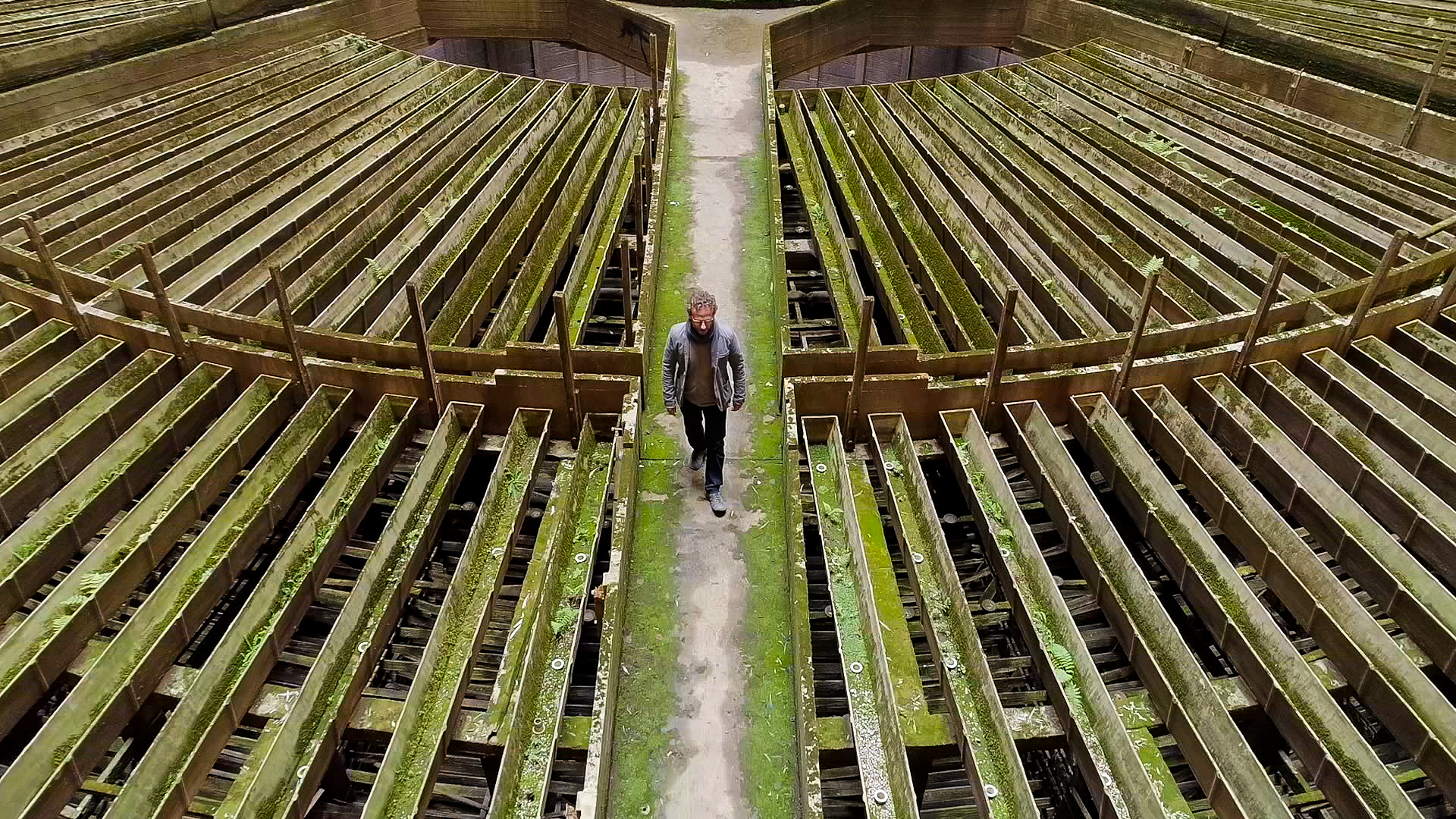
Davide D"Angelo. Image: Xavier Aaronson/Motherboard
Over the course of nearly 15 years, DAMA did in fact register seasonal fluctuations in its detectors that were in accordance with this theory and the expected signature of a dark matter particle. In short, it seemed as if DAMA was the first experiment in the world to detect a dark matter particle. The problem, however, was that DAMA couldn’t completely rule out the possibility that the signature it had detected was in fact due to some other seasonal variation on Earth, rather than the ebb and flow of dark matter as the Earth revolved around the Sun.
SABRE aims to remove the ambiguities in DAMA’s data. After all the kinks are worked out in the testing equipment, the Gran Sasso experiment will become one half of SABRE. The other half will be located in Australia in a converted gold mine. By having a laboratory in the northern hemisphere and another in the southern hemisphere, this should help eliminate any false positives that result from normal seasonal fluctuations. At the moment, the SABRE detector is still in a proof of principle phase and is expected to begin observations in both hemispheres within the next few years.
When it comes to SABRE, it’s possible that the experiment may disprove the best evidence physicists have found so far for a dark matter particle. But as D’Angelo pointed out, this type of disappointment is a fundamental part of science.
“Of course I am afraid that there might not be any dark matter there and we are hunting ghosts, but science is like this,” D’Angelo said. “Sometimes you spend several years looking for something and in the end it’s not there so you have to change the way you were thinking about things.”
For D’Angelo, probing the subatomic world with neutrino and dark matter research from a cave in Italy is his way of connecting to the universe writ large.
“The tiniest elements of nature are bonded to the most macroscopic phenomena, like the expansion of the universe,” D’Angelo said. “The infinitely small touches the infinitely big in this sense, and I find that fascinating. The physics I do, it’s goal is to push over the boundary of human knowledge.”
Source link
Dr. Berg Turns 50 - Explains What He Eats and His Nutrition
FREE Keto mini-course delivered to your messenger: http://pxlme.me/HnHLd5z5
Organic Cruciferous Food : https://shop.drberg.com/organic-cruciferous-food-regular
The Health & Wellness Center
4609 D Pinecrest Office Park Drive
Alexandria VA 22312
703-354-7336
Dr. Berg talks about a heathy diet plan and nutrition facts. He discusses about the nutrition and healthy food plan from his own diet. Dr. Berg does not consume much alcohol (very rarely) and does not smoke. Healthy breakfast ideas can include eggs, cheese, avacado. A healthy food for lunch salads could include salads (10 cups), beef. A heathy diet for dinner could include vegetable dishes with a small amount of protein (but should be had in small quantity).
Dr. Berg turns 50 years old on the 31st of March. His nutrition includes Raw Organic Wheat Grass Juice Powder, Adrenal Day Formula, Adrenal Fatigue Formula, Cruciferous Food (when low in daily cruciferous foods), calcium magnesium (Calcium Lactate from Standard Process), Vitamin D3, K2, DHA and every other month, he takes Live Probiotic Flora.
His breakfast includes 4 eggs, cheese, avocado and hormone free bacon occasionally. For lunch he will eat a massive salad with some protein (beef - not lean or other meats). For dinner, he will have some other vegetable dish with a small amount of protein OR cheese. His food later in the evening may be simply snacks - nuts, peanut butter with apple or celery and similar.
His exercise includes running 1-2 miles per day, sometimes rock climbing and stretching.
Dr. Eric Berg DC Bio:
Dr. Berg, 50 years of age is a chiropractor who specializes in weight loss through nutritional and natural methods. His private practice is located in Alexandria, Virginia. His clients include senior officials in the U.S. government and the Justice Department, ambassadors, medical doctors, high-level executives of prominent corporations, scientists, engineers, professors, and other clients from all walks of life. He is the author of The 7 Principles of Fat Burning, published by KB Publishing in January 2011. Dr. Berg trains chiropractors, physicians and allied healthcare practitioners in his methods, and to date he has trained over 2,500 healthcare professionals. He has been an active member of the Endocrinology Society, and has worked as a past part-time adjunct professor at Howard University.
DR. BERG"S VIDEO BLOG: http://www.drberg.com/blog
FACEBOOK: http://www.facebook.com/DrEricBergDC
TWITTER: http://twitter.com/DrBergDC
YOUTUBE: https://www.youtube.com/user/drericbe...
ABOUT DR. BERG: http://www.drberg.com/dr-eric-berg/bio
DR. BERG"S SEMINARS: http://www.drberg.com/seminars
DR. BERG"S STORY: http://www.drberg.com/dr-eric-berg/story
DR. BERG"S CLINIC: https://www.drberg.com/dr-eric-berg/c...
DR. BERG"S HEALTH COACHING TRAINING: http://www.drberg.com/weight-loss-coach
DR. BERG"S SHOP: http://shop.drberg.com/
DR. BERG"S REVIEWS: http://www.drberg.com/reviews
The Health & Wellness Center
4709 D Pinecrest Office Park Drive
Alexandria, VA 22312
703-354-7336
Disclaimer:
Dr. Eric Berg received his Doctor of Chiropractic degree from Palmer College of Chiropractic in 1988. His use of “doctor” or “Dr.” in relation to himself solely refers to that degree. Dr. Berg is a licensed chiropractor in Virginia, California, and Louisiana, but he no longer practices chiropractic in any state and does not see patients. This video is for general informational purposes only. It should not be used to self-diagnose and it is not a substitute for a medical exam, cure, treatment, diagnosis, and prescription or recommendation. It does not create a doctor-patient relationship between Dr. Berg and you. You should not make any change in your health regimen or diet before first consulting a physician and obtaining a medical exam, diagnosis, and recommendation. Always seek the advice of a physician or other qualified health provider with any questions you may have regarding a medical condition. The Health & Wellness, Dr. Berg Nutritionals and Dr. Eric Berg, D.C. are not liable or responsible for any advice, course of treatment, diagnosis or any other information, services or product you obtain through this video or site.
source
Running - Use Foam Roller To Get Rid Of Runners" Knee - Running Injury Free Revolution (RIF REV)
Running Injury Free Revolution (RIF REV) - empowering runners worldwide to run injury free. http://www.rifrev.com/
http://www.bodyleadership.com.au/physiotherapy_brisbane.html
http://www.bodyleadership.com.au/ergonomic.html
http://www.bodyleadership.com.au/physio.html
http://www.onsitephysiotherapybrisbane.com.au/
http://www.camphillphysiotherapy.com.au
http://www.sportsphysiobrisbane.com.au
http://www.dancephysiobrisbane.com.au
http://www.carindalephysiotherapy.com.au
http://www.runningphysiobrisbane.com.au
source
How To Get Bigger Arms In 4 Weeks At Home (Home Workout For Beginners)
➳Download Our FREE 4 Week Transformation Program http://aestheticsfromhome.com/
➳Online Coaching for Customized Workout Plans and Meal Plans http://therippedbros.com/coaching/
source
Muscle Training Gear Body Fit Arms Exercise Fitness Massage Trainer Equipment US
Muscle Training Gear Body Fit Arms Exercise Fitness Massage Trainer Equipment US
Price : 111.82
Ends on : [readable_time]2017-08-05 09:37:03[/readable_time]
View on eBay
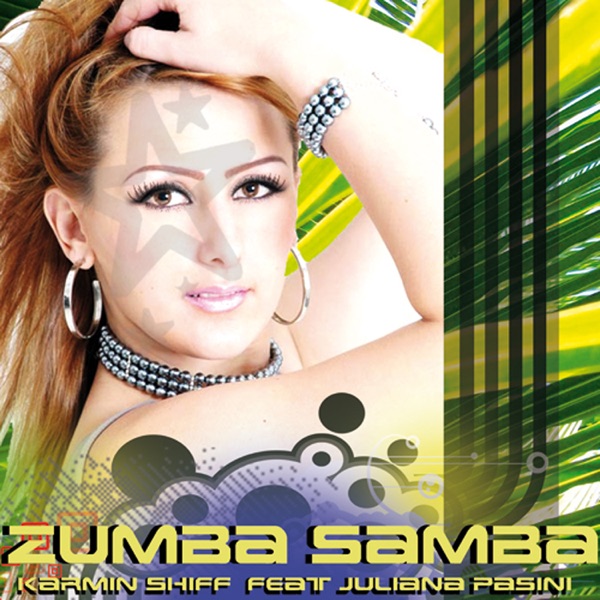
Zumba Samba(Federico Palma Remix) [feat. Juliana Pasini]
[embed]https://audio-ssl.itunes.apple.com/apple-assets-us-std-000001/Music5/v4/5d/fd/ca/5dfdca6c-a9b9-7f76-2fc9-bf425599430f/mzaf_7547602932586091031.plus.aac.p.m4a[/embed]
By Karmin Shiff
Download now from Itunes
Summer Ritual

[embed]https://audio-ssl.itunes.apple.com/apple-assets-us-std-000001/Music/ff/b2/a4/mzm.aikacteb.aac.p.m4a[/embed]
By Jessita Reyes, Ben Tavera King & Komuso
Download now from Itunes
Leonardo’s Robots | Interesting Thing of the Day

As I have mentioned numerous times, I was obsessed with science and technology as a child. I was especially fond of robots—both real and fictional. The magazines I read showed glossy photos of household robots that could vacuum the carpet and serve drinks; it was clear that human beings would no longer have to do such menial tasks in the future. It was less clear that robots would ever be able to do truly useful tasks like repairing the plumbing or washing the windows, but this was unimportant to me. All I cared about was that robots were cool. If they could move around and impress my friends, that would be good enough.
Naturally, I dreamed of someday building my own robot, and even made an abortive attempt to do so when I was about 12. But I was equally happy tinkering with smaller, less-ambitious projects. My bedroom was always full of wires, batteries, motors, solar cells, and electronic doohickeys of all sorts. When I wasn’t disassembling a TV or radio, I spent a lot of time (and money) in Radio Shack buying components that I could assemble into some amazing contraption. The only problem (apart from my rather incomplete grasp of electronics) was that I had trouble figuring out exactly what I should make. What task needed to be done that a gadget could perform? I couldn’t figure it out. So I was constantly asking my mother, “What can I invent?” She’d invariably say, “If I told you, then I’d be the one inventing it.” That was beside the point, of course—it was really the engineering I was interested in, not the idea-generation itself.
Renaissance Robotics
A little over 500 years earlier, Leonardo da Vinci was in just the opposite situation: coming up with ideas for inventions left and right, but doing comparatively little in the way of actual experimentation and implementation. Of course, I do not in any way mean to belittle Leonardo’s remarkable achievements in so many different fields, but he did have somewhat of a reputation for coming up with half-baked ideas that were never constructed—and in many cases, wouldn’t have worked if they had been. His human-powered helicopter design is perhaps the best-known of these wouldn’t-it-be-nice “inventions.” On the other hand, Leonardo’s sketches did contain a lot of designs that showed uncanny cleverness and sophistication, far ahead of his time. Among these are drawings that experts today believe were designs for robots—which, if true, would make Leonardo the world’s first roboticist.
The sketches in question were made around 1495, but were unknown until an Italian scholar named Carlo Pedretti found them in the 1950s. Nothing in the several pages of drawings looks like a complete robot; the gears, pulleys, cables, and so on appear to untrained eyes to be random machine components. But Pedretti believed that taken together, they could represent the plan for a mechanical man. Leonardo apparently intended a suit of armor to be used as the robot’s body. Several decades after the sketches’ discovery, a robotics expert named Mark Rosheim came across Pedretti’s description of Leonardo’s robot. Rosheim studied the drawings extensively and, using computer simulations, determined exactly how they could have fit together to form a humanoid robot. The digital model of the robot showed that it could sit up, wave its arms, bend its legs, move its head, and open and close its jaw; a mechanical apparatus in the chest controlled arm movements, while an external crank moved the legs.
Getting with the Program
Leonardo’s humanoid robot was clearly based on his long and detailed study of human anatomy—the same research that had led to his famous Vitruvian Man drawing and its accompanying list of proportions in about 1490. But apparently, this was not Leonardo’s first foray into the world of robotics. An earlier drawing, from 1478, was thought for years to be the design for a spring-powered cart. But Rosheim’s analysis showed that it was much more than that. The mechanism inside could be adjusted (by replacing various cams) to determine the course the cart would travel. In other words, it was, in a manner of speaking, a programmable analog computer—and since it was also mobile, it could be considered a robot.
Most experts consider it unlikely that Leonardo ever built the robots shown in the sketches. Rosheim, however, did build a reproduction of the cart, as well as a version of the robot that maintained Leonardo’s overall design but substituted a few pieces of modern technology, such as electric motors. Both functioned as Rosheim’s computer models had predicted, meaning that Leonardo’s designs were right on the money, even if he never did build them. The robot doesn’t do anything useful—unless you consider entertaining and impressing your friends useful, which I certainly do. I’m sure Leonardo would have agreed.
Note: This is an updated version of an article that originally appeared on Interesting Thing of the Day on May 12, 2005.
Source link
MELBOURNE VLOG | WINGS FOR LIFE RUN, FOOD PORN, ESCAPING A ROOM?!
Explore Melbourne with me! Luna Park, Wings For Life World Run, a random escape room and some epic vegan food :)
COME SAY HI ON MY SOCIAL MEDIA:
Insta:
Tumblr:
Snapchat: em_careyy
CHECK OUT MY $15 VEGAN RECIPE EBOOK!
source
FAVE AB WORKOUTS: PLANK EXERCISES | tarte talk
Plank it out with Deanna! Learn different types of planks and do these all from home! No GYM necessary!
💜 Like & Subscribe 💜
Subscribe here: www.youtube.com/tartecosmetics
SNAPCHAT: tartecosmetics
INSTAGRAM: http://bit.ly/1o2cZRn
TWITTER: http://bit.ly/1RfE8ZB
FACEBOOK: http://bit.ly/1pFFPsP
SPOTIFY: http://spoti.fi/2zB5BUx
source
Orgain Organic Meal | Vegan Meal Replacement Review 🌱
Today I am reviewing the Orgain Organic Meal Vegan Meal Replacement Powder! This can be used by itself or blended up with fruit, greens, meat...just kidding ;)
...for a healthy meal replacement if you are looking to cut down on calories, or to bulk up! it all depends on your goals and lifestyle.
Click the link for full reviews! http://amzn.to/2hW1NIu
If you are looking for a vegan, organic meal replacement shake...I highly recommend this one!
It is much more nutrient dense than just a protein powder....so if you are looking for something to replace a meal while still providing a good macro nutrient profile and some whole food based vitamin and minerals....check it out!
& be sure to like, comment, share, and subscribe if you liked this video!
~~~~~~~~~~~~~~~~~~~~~~~~~~~~~~~~~~~~~~~~~~~
My main purpose of this channel is to share with you various plant-based supplements and foods I"ve found to be very beneficial, regardless of your individual health goals.
source
5 Killer Stomach Workouts for Impressive Abs
Having a well-chiseled six pack is the ultimate fitness goal for many people. And it’s okay if you want some as well.
Having a strong core is of vital importance – not just for aesthetics, but also for improved strength and overall health.
But there’s a problem – many people never succeed in carving out the core of their dreams! For some people, the problem lies in their approach to working out, while others have got their feeding wrong. Either way, there’s a remedy and you can commence your journey to an impressive six pack – starting today!
In this article, we’ll go over the role nutrition plays in carving out the body of your dreams, as well as non-sexy reasons for having a strong core.
I’ll also be sharing some proven stomach workouts and core exercises that’ll help you carve out an impressive ab and then I’ll cap it up by revealing the fool-proof formula for carving out that magazine-worthy core that you desire. So, be sure to stick around to the end, okay?
Why you need rock-solid abs
Believe it or not, there’s actually more to having a strong core than just good looks. Core muscles are required for just about everything we do on daily basis, from sitting, to walking, running and throwing things around.
Before we go any further, though, you should probably know that there’s more to core muscles than just the abdominals (abs), it also includes hip and pelvic muscles, as well as mid and lower back muscles. All these muscles work synergistically to support movement and maintain stability. Here are some benefits of having strong core:
1. It helps your posture.
When you engage in core-strengthening exercises, the thorough working of the torso helps to maintain a balanced posture. The posture balance in turn helps to reduce the risk of vertebrae degeneration and disc herniation…in other words, bad conditions for your spinal cord.
2. It reduces back pain.
Having a strong core also helps to alleviate back pain by providing adequate support for the spine. Research has also revealed that having strong core muscles reduces the risk of back injury during workouts.
3. It improves athletic performance.
You’re going to have a hard time finding a sport that doesn’t rely heavily on core muscles for effective performance. From running, to rowing, baseball, football and tennis, every sport you could possible think of engages the core in one way or the other.
So, if you’re planning to become an athlete, then strengthening your core is absolutely indispensable.
4. It makes life easier on-the-job.
Life will become a whole lot easier for you on the job if you can manage to strengthen your core. And the reason is simple – just about every activity you engage in at work engages your core…from standing to lifting, twisting and even sitting.
So, if you’d like to be a bit more comfortable and energetic at work, then strengthening your abs and back muscles would be a great place to start.
Nutritions you need for impressive abs
Alright, before we dive into which exercises you should start focusing on, let’s talk about the most important factor in building an impressive figure – what you eat.
If you’re a frequent gym goer, then chances are that you’ve overheard this common saying among gym rats – “abs are made in the kitchen.” Well…they’re not wrong!
Doing 1,000 crunches per day won’t give you magazine-worthy six packs if you’ve got your nutrition wrong. Okay, here’s how it works:
Ab exercises are aimed at strengthening your core muscles, not revealing them.
In other words, you may have a strong core, but until the fat layer above it is torched, it will stay hidden.
This is why your first course of action should be weight loss…which begins with a proper diet. Your daily diet should contain the right amount of macronutrients (carbohydrates, protein and fat) and micronutrients (vitamins and minerals).
So, in order to save yourself a whole lot of frustration and headache down the line, you need to ditch junk foods and start eating clean foods.
5 Amazing stomach workouts for rock-solid abs
Before diving into the specific workouts that will finally send your abs out of hiding, there are a couple of anatomical jargon you need to be familiar with. These are just fancy names for the muscles that make up the abs and they are:
- Rectus abdominis (front abs commonly known as six-packs)
- Internal and external obliques (side abs found around the waist).
Got it? Great! Keep those in mind because I’ll be mentioning them a lot in the coming paragraphs.
Now, let’s move on to the actual workouts:
1. Crunches
Regardless of the negative media crunches may have received over the years, one thing is for certain – it works…when done correctly!
Crunches are great for eliciting muscle activity in the rectus abdominis and this helps greatly in strengthening those muscles.
How to do the traditional crunch
- Lie on your back, bend your knees and place your feet closely together and flat on the floor. You may want to hold on to something with your toes to make it easier.
- Place your hands behind your head (without interlocking them) or place them across your chest.
- Keep your elbows open to the sides.
- Gently tighten and pull in your abs.
- Curl forward lifting your head and shoulder blades off the floor towards your knee.
- Hold it for a moment and lower back down slowly.
Several variations of the traditional crunch have been developed to focus on other core muscles ignored by regular crunches. One of these is the bicycle crunch or bicycle kicks. The bicycle crunch impacts the external obliques (on the side of the waist) in addition to the rectus abdominis and this helps to work the torso.
How to do the bicycle crunch
- Lie on your back, bend your knees and place your feet wide apart on the floor.
- Place your hands behind your head without interlocking them and avoid pulling your head with your hands to avoid neck pain.
- Lift your right knee off the floor, toward the left side of your chest and simultaneously lift your left elbow to meet your right knee.
- Repeat this process for the left knee and right elbow and keep up this cycle until your abs are thoroughly worked.
- Be sure to completely lift your shoulder blades off the floor to keep the action concentrated on your core.
Check out this video for how to do the bicycle crunch:
2. Planks
There’s a good reason why plank has gained so much attention in the fitness industry – it works. Not only does it crush the rectus abdominis, it also greatly impacts the external obliques and transverse abdominis.
In simple terms, it rocks your abs in a way regular crunches don’t and also doesn’t give you back pain no matter how long you hold out doing it.
Planks aren’t just a great workout for abs, though, it also does a great job strengthening the arms, shoulders and glutes.
Just like the crunch, there are several variations of the plank, each adapted to focus on specific muscle groups which may have been ignored by others. Here I’ll be discussing just two of them – the front plank and the side plank.
How to do the front plank
The front plank is the basic plank position and it targets your rectus abdominis. Here’s how to do it.
- Start in the pushup position with your arms placed as far apart as your shoulders and place your feet together.
- Rest your weight on your forearms, with your palms facing the ground and maintain a 90-degree angle between your shoulders and fore arm.
- Raise your hip slightly and maintain a straight line from your head to your feet.
- Hold the position for as long as you can before your form collapses.
- Rest for a few minutes and repeat.
- Aim for 3-5, 30-120 seconds sets per workout and it should get you shaking!
- If this isn’t challenging enough, raise an arm and a leg to increase the difficulty level.
How to do the side plank
Apart from strengthening the front abs, the side plank also comes with an added advantage of working the external obliques and transverse abdominis, thus helping you to carve out that dreamy physique you’ve always desired in your midsection. Here’s how to do it:
- Lie on your right side, supporting your body by placing your right forearm on the floor.
- Place your left leg on the right leg while maintaining this position
- Lift your hip off the ground maintaining a straight line from your shoulder to your feet.
- Lift your left arm into the air to maintain balance.
- Hold this position for as long as you can (one – two minutes is fine).
- Rest for a few minutes and repeat for the other side.
- Aim for 3-5 reps per workout.
- To increase the difficulty level, you can raise the leg on top.
3. Russian twists
The Russian twist is an amazing workout that works just about every muscle in your core as you twist from side to side. The obliques are the more obvious beneficiaries, though, as the side-to-side motion really impacts the torso and helps to carve out an impressive side.
And just like the other workouts listed so far, no serious gym equipment is required. All you need is some space on the floor and the will to keep going!
How to do the Russian twist
- Sit on the ground and bend your knees such that there’s a 90-degree angle between your upper and lower legs.
- You may place your feet under something immovable or lift them slightly off the floor.
- Tilt your back towards the ground at an approximate angle of 45-degrees with the ground.
- Hold your arms straight before you and twist as far as possible to one side before doing the same thing for the other side.
- To kick things up a notch, hold a mildly heady object in your hands as you twist from side to side.
- Aim for 10-12 reps on each side, rest and repeat the process 3-5 times.
4. Hanging leg raise or knee raise
This is another exercise that will rev up your core and leave your abs strengthened for days. The most beautiful thing about this workout is its scalability. You can start off with bent knee raises, then you can move on to straight leg raises and ultimately to toe-to-bar raises.
How to do the hanging leg raise or knee raise
- Grab the pull-up bar, ensuring that your arms are straight and your feet are totally off the ground.
- Straighten your legs and keep them firmly together all the while.
- Tighten your abs and use your core to raise your straightened legs forward until they form an angle of 90-degrees with your midsection.
- Hold this position for a few seconds and slowly return your legs back to their normal position.
- For the knee raise, bend your knees before raising them to an angle of 90-degrees with your midsection.
- For either movement, make sure you get your legs up using only your core. Avoid swinging them up with momentum.
- To make things a bit more challenging, try placing a medicine ball between your ankles or knees.
- Aim for 3-5 sets in the 10-15 rep range and you midsection should be burning for days to come.
5. Ab-wheel roll-out
Alright, this one may require a trip to the gym but trust me, it’ll be worth every minute of your time.
If there’s one thing those infomercials got right, it’s the fact that ab wheels produces better muscle activation than crunches and leg raises.
As you roll out on the wheel, your trunk is forced to fire actively in order to maintain the neutrality of the spine and prevent collapsing due to gravity and your body weight. In order words, it does a great job of crushing your abs and carving out those much-desired six packs.
How to do the ab-wheel roll out
- Get into a tabletop position and place some pads under your knees for protection.
- Place your hands on the ab wheel and take a deep breath.
- Push your belly backward to prevent it from sagging as you roll out.
- Roll out the wheel as far as you comfortably can and keep your core tight all the way.
- Hold the position for a few seconds and roll back in, fully engaging your abs as you do so.
- To kick things up a notch, strap on a backpack containing some weight as you roll in and out.
- Aim for 2-5 sets in the 10-15 rep range and you’ll definitely feel it in your abs for days to come.
Bonus Tip: Your other muscle groups
Before you dash off, don’t ignore other muscle groups!
Here’s a little fact you need to wrap your head around – doing only ab exercises won’t give you six pack! Here’s why:
Your abs are invisible because it’s covered by a heavy layer of abdominal fat.
Excessive body fat results from calorie surplus, which means you take in more calories than you burn. And the abdomen is just one of the several fat-storage spots in the body.
So, lowering your total body fat should be the first course of action and that requires a full body workout.
Contrary to what some marketers would have you believe, you can’t directly target abdominal fat for elimination, there’s simply no scientific evidence behind this hocus pocus.
Although research has revealed that training a particular muscle group does increase lipolysis (conversion of fat into energy) and blood flow in that area, the effect is usually too negligible to matter.
So, training a particular muscle group doesn’t make them cannibalize the fat covering them, although it does help those muscles to consume more energy as they get bigger.
You may do hundreds of crunches and leg raises until your abs almost explode, but you still won’t see those abs if you don’t reduce the percentage of your total body fat 15% or less. Fat loss is a full-body process and that means you need to stick to a calorie deficit and train all muscle groups to achieve it.
The bottom line
There are no magic tricks to carving out an impressive core! If you want great abs, you need to do three things – eat right, train right and burn fat!
And no, this isn’t going to happen overnight, so you’ll have to commit months to the stomach workouts listed above, as well as full-body exercises to achieve your goal.
Here’s the thing, though – you can do it!
Start today, take it one day at a time and a few months from now you’ll look in the mirror and love what you see. Stop sitting around, get out there and get it done!
Featured photo credit: Unsplash via unsplash.com
Source link
Kizzito Built His Spirit | Build Your Body
Build your body to sharpen what you want out of life. Respect. Discipline. Self-esteem. Honesty. Joy... things that translate outside the realm of the weights.
► Shop Bodybuilding Signature Supplements: https://bbcom.me/2L5GOgb
► Premium Fitness Plans: https://bbcom.me/2L5H3YD
| Follow Kizzito Ejam |
► YouTube: https://www.youtube.com/user/kizmvp777
► Instagram: https://www.instagram.com/kizmvp/
► Facebook: https://www.facebook.com/kizmvp
► Twitter: https://twitter.com/KizMVP
| Bodybuilding.com Signature Supplement Stacks |
► Signature Beginner Stack: https://bbcom.me/2L4yOfl
► Signature Muscle Building Stack: https://bbcom.me/2L6qNqa
► Signature Pre/Post Stack: https://bbcom.me/2L2PBj4
| Bodybuilding.com Signature Supplements & Clothing |
► Signature 100% Whey Protein: https://bbcom.me/2L6H7qX
► Signature Amino Plus Energy: https://bbcom.me/2L4WbWh
► Signature BCAA: https://bbcom.me/2L2v3Hy
► Signature Creatine Monohydrate: https://bbcom.me/2L2PFiO
► Signature Fish Oil: https://bbcom.me/2L5Gi1U
► Signature Green Tea: https://bbcom.me/2L4tjxf
► Signature Joint Support: https://bbcom.me/2L3tc56
► Signature L-Carnitine: https://bbcom.me/2L3tbOA
► Signature Micronized Glutamine: https://bbcom.me/2L2PKTE
► Signature Multivitamin: https://bbcom.me/2L7n5g9
► Signature Pre Workout: https://bbcom.me/2L5Q8AQ
► Signature Test Booster: https://bbcom.me/2L54Bgt
► Signature Vitamin D3: https://bbcom.me/2L5QHdQ
► Signature ZMA: https://bbcom.me/2L5GqOW
► Bodybuilding.com Clothing: https://bbcom.me/2L4zf9t
=============================================
| Bodybuilding.com |
► Supplement Store: https://bbcom.me/2L4zEJ1
► Sales & Specials: https://bbcom.me/2L4JxGB
► Fitness Articles: https://bbcom.me/2L6rsYG
► Premium Fitness Plans: https://bbcom.me/2L5H3YD
=============================================
| Follow Us |
► Twitch: http://bit.ly/2q1dttE
► YouTube: http://bit.ly/1RSJFa4
► Facebook: http://on.fb.me/1lomhpr
► Instagram: http://bit.ly/1LzBxab
► Twitter: http://bit.ly/1RSJQlL
► Google+: http://bit.ly/1NRe8qu
► Pinterest: http://bit.ly/1OOZgY4
► Spotify: http://spoti.fi/1NRebm0
We are Bodybuilding.com. Your transformation is our passion. We are your personal trainer, your nutritionist, your supplement expert, your lifting partner, your support group. We provide the technology, tools and products you need to burn fat, build muscle and become your best self.
source
Write A Love Letter And Kitty Covey Will Mail It To A Celeb

41 steampunk tattoo designs Every Machinery Fan Would Love
Steampunk tattoo designs are defined by celebrating the victorian era where cogs, steams and science and machinery in general ruled the world. While most try to hold true to these designs, nowadays people are more flexible with their tattoo designs and try and incorporate other elements that just look cool inside the ink. If you love tattoos, you"re gonna love these tattoo designs inspired by architecture. But don"t browse away until you saw all of the steampunk inks we feature here in this list of 41 pictures.
As always, if you like what you read, please SUBSCRIBE to our newsletter
1.

2.

3.

4.

5.

6.

7.

8.

9.

10.

11.

12.

13.

14.

15.

16.

17.

18.

19.

20.

21.

22.

23.

24.

25.

26.

27.

28.

29.

30.

31.

32.

33.

34.

35.

36.

37.

38.

39.

40.

41.

We"re sorry about not posting image sources on this one, we just couldn"t find any for most pictures, if you do find one or are that owner of the tattoo or image, please contact us and we will gladly add your source.
Source link
Subscribe to:
Comments (Atom)